Oregano | Origanum Vulgare
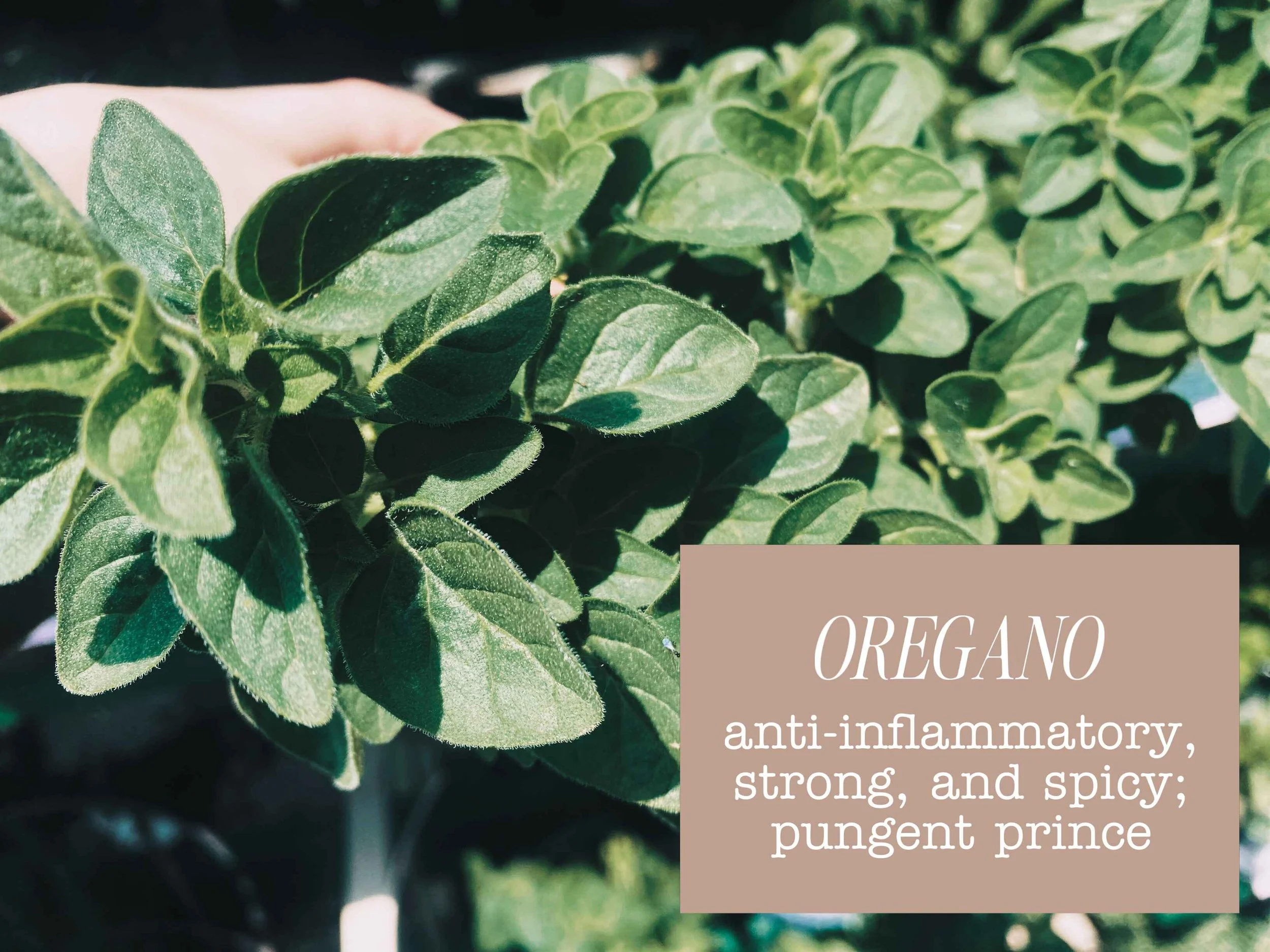
COMMON Species: Origanum vulgare, Origanum onites, Origanum heracleoticum
FAMILY: Lamiaceae (Mint family)
GENUS: Primarily Origanum

Who is this “Joy of the Mountains?”
Oregano is the sharp-tongued prince who clears mucus, microbes, and mental fog with pungent heat. He doesn’t soothe and cool: he purges, leaving only clarity behind. Oregano (Origanum vulgare L.) is often partnered with pizza and Mediterranean cuisine today, making it easier to forget about the ancient roots. Long before it became a kitchen staple, oregano was esteemed for far more than flavor. It was a medicinal herb with a rich legacy.
Cultivated in the sunny and rocky cliffs of the Mediterranean, the name roughly means “joy of the mountain.” This reflects both the wild origins and uplifting aroma. The American Herbal Product Association (AHPA) highlights that ancient cultures prized oregano for therapeutic uses. Greek physicians like Hippocrates turned to oregano to soothe digestive issues and respiratory ailments, while Romans employed it as an antiseptic and remedy for muscle pain and infection. For centuries, folk medicine across Europe embraced it for coughs, cramps, and general wellness—even using it in wedding ceremonies and grave markers to symbolize joy and peace.
(I like to create a little story line to help me remember the background, like Matthew Wood does!)
Where did this “prince” come from? (History)
In Hippocratic texts (c. 400 BCE), oregano was described as warming, drying. It also was considered good for treating indigestion, respiratory congestion, and wounds. Later the Romans adapted many of the Greeks medicinal ideas and Oregano made it’s way into Roman apothecaries. Pliny the Elder noted in his encyclopedic Natural History (77 CE), about oregano’s ability to ease spider bites and scorpion stings. It was also used to help those who had consumed too much wine, indeed a historical hangover remedy. Persian medical texts like The Canon of Medicine by Avicenna (Ibn Sina, 980–1037 CE) mention oregano for its “hot and dry” nature which in many medical “systems” is thought to improve digestion and circulation. Ayurveda and Unani systems utilize herbs within the Oregano family (not botanically specific) for respiratory and digestive issues. Anything circulatory can often be thought of as addressing stagnation within different areas/systems of the body. Often used in herbal decoctions or infused oils to relieve congestion and muscle aches. Hildegard of Bingen who was a 12th-century German abbess and healer, included oregano in the healing plants within her writings. Around this time Oregano was utilized in teas, tinctures, poultices, etc. In the 20th and 21st century, oregano was gifted a new role in essential oil form. A study in the Journal of Applied Microbiology (2001) found oregano oil effective against certain antibiotic-resistant bacteria and the compounds are also being researched more for these benefits!
So…What does it do?
Oregano has natural antibacterial power that’s due to the wonderful compounds called carvacrol and thymol. These substances help fight harmful bacteria, including common human pathogens like Staphylococcus aureus and Escherichia coli. It does this by disrupting their cell walls and stopping their growth. What’s great is that oregano tends to target the bad bacteria while being gentler on the beneficial bacteria that lives within our gut. This helps support a balanced microbiome, which is important for healthy digestion and overall immune function. In addition to its antibacterial effects, oregano is also traditionally used by practitioners to help address parasites and other unwanted organisms. Truly a very valuable and versatile herb in health care.
<Practitioner Exploration>
Oregano used alongside Pau D’Arco, Olive Leaf, and Sage have shown significant improvements for Small Intestine Bacterial Overgrowth (SIBO). This study also acknowledged the more positive post-treatment effects with herbal remedies as compared to the antibiotic rifaxamin (Dr. Axe). Oregano oil feeds a balanced gut microbiota by inhibiting the bad bacteria like Staphylococcus aureus and potentially feeding the good such as Lactobacillus species.
One might consider Oregano for for parasites alongside the necessary diet/lifestyle adjustments.
Oregano has also been shown to increase high-density lipoprotein (HDL – healthy) cholesterol and significantly reduce low density lipoprotein (LDL - unhealthy), the balance of which can be a key part of reducing the risk of vascular disease (Dr Axe). Clinical studies are researching the antiparastic action on Entamoeba hartmanni, Endolimax nana and Blastocystis hominis. Learning from other herbalists can give us a richer view of how oregano is used beyond cooking or cold-season remedies. Their hands-on experience helps bring the plant to life: not just in theory but also in practice. While the science is still catching up in some areas, these insights offer valuable guidance on how oregano fits into everyday herbal care.
Cooking with oregano
Oregano is quite pungent when dried, and for some maybe a little overpowering. Start small and build off the base flavor, testing combinations, textures, and feelings. Fresh Oregano is considered a bit more mild and works great when you desire that fresh flavor. If you happen to know where to find some Fresh , you might enjoy trying it in your salads or as a garnish! Alternatively, if you are interested in growing it yourself; I have good news, it is easy and not too picky. Maybe you don’t have access to it fresh and maybe want his warm and more concentrated earthy flavor, in that case dried Oregano is your answer! Dried herbs last longer and perform well in longer cooked dishes like soups and stews.
1 TBSP fresh = 1 tsp Dried
- Some creative ways to test and try it in your dishes:
1.) Simply add into your morning eggs or omelet. (It pairs wonderfully with fats: like we learned about Tarragon in our May event)
2.) Season your Roasted Veggies
3.) Try homemade crackers with an infused oil. You can also try this is salad dressings.
Our June Find your Flavor guest speaker Kathie shared some lovely recipes from her website: https://homespunseasonalliving.com/
You might enjoy this handheld spice or coffee grinder (I truly use this daily!): https://amzn.to/3ZLhoNP
Bridging the kitchen & Apothecary
One thing I like to sort of debate about is utilizing Food as Medicine, a topic that can be quite controversial. For me it is absolutely NOT “this herb will fix your problems,” instead I think of herbs as alleys and supporters. Intentional cooking is a clear form of herbal practice which quite literally is utilizing plants for medicinal purposes. The Health Affairs did a survey on “Food is Medicine,” asking U.S. respondents questions regarding medical conditions, diets, and slight potential correlations. While there are clear limitations to this study, I want to do something I wouldn’t typically recommend doing and “cherry pick” a statistic from this survey. Over 2/3rds of the respondents answer that government programs (such as medicaid) should cover “Food as Medicine” initiatives. Over 3/4ths (75.4%) felt that ‘Food as Medicine’ should be available for populations with specific health concerns. Again, this study had some limitations and should be referenced “with a grain of salt.” What I really want to highlight is the very clear interest in this movement or whatever you want to call it. According to this recent data, nearly 90% of people agree that healthy food plays a key role in preventing chronic conditions such as high blood pressure and diabetes. Many even agreed they would even welcome food-based prescriptions from their healthcare provider. This growing interest reflects a return to something our ancestors practiced intuitively: using food not just to nourish, but to restore.
This is where the idea of moving from the kitchen to the apothecary comes in. The space where we prepare meals can also be a place where we begin to support wellness more intentionally. A place where herbs, spices, and whole ingredients become part of a daily rhythm and care. It doesn’t require a major overhaul or complicated routines, it can simply be a shift in our perspective. With oregano as our example: something as simple as adding a pinch to a pot of soup or brewing a quick tea can quietly support digestion, respiratory health, and immune balance. These small and thoughtful choices in the kitchen are the beginning of home herbalism where nourishment and medicine start to intertwine. As someone with a Science based background, I was very concerned about contamination and all the small details. If you are working to sell products and ensure shelf stability, then combining your kitchen and “medicine making” space may not be for you. For the “everyday Joe,” you really don’t need to over-complicate it! Use your senses to reflect what your body might be trying to tell you! I talk all about this on my YouTube Series: Befriending the Body.
Here are some simple tips to get started:
1.) Keep dried Oregano on hand and then use it intentionally. Add to your roasted veggies or broth with the intention of supporting digestion or the immune system. Let it steep a little longer in liquids to draw out more of its benefits.
2.) Steep 1–2 teaspoons of dried oregano in hot water for about 10 minutes to create a tea. Sip it after meals to ease bloating or during a cold to help open the airways. It’s strong and earthy, so you can pair it with honey or citrus if needed.
3.) Infuse dried oregano in olive oil over low heat or let it sit for a few weeks in a sealed jar in a sunny window. Use it as a finishing oil for food or as a base for topical use (like on sore muscles or minor skin concerns).
4.) One of my favorite ways of preserving, chop fresh oregano and freeze it in an ice cube tray with olive oil. Toss a cube into soups or stews for both flavor and function.
5.) Label by function not just flavor! Instead of just Oregano maybe write “Oregano for Digestion and Respiratory.” If you attended our recent free event, you know that ‘Oregano’ is essentially just a flavor name anyways and doesn’t truly identify an herb as the Oreganum Genus.
DOSAGE/SAFETY:
“Oregano oil can be taken internally for a maximum of two weeks in most cases due to its powerful action (Herbal Reality).” Capsules in store are typically around 600mg and should state dosage recommendations. For tinctures (1:5 45%) taking 2-3ml up to twice a day. Alternatively you might try an infusion by placing 1 teaspoon of dried plant material into one cup of boiling water, infuse it for between 10 – 15 minutes. This should be consumed hot for up to 3 times a day. Parts used (and researched most) are the leaf and flower.
Oil of Oregano may decrease absorption of minerals like zinc, copper, and iron and therefore recommended to be taken 2 hours before any supplements. If taking medications to slow blood clotting, oregano as an addition might increase the risk of bruising and bleeding. If you have allergies to anything withing the Mint family, be cautious.
Oregano does have a few twins or cousins like Basil, Thyme, Marjoram is more like a twin,Tarragon, Parsley, Sage, Rosemary, and Mexican Oregano is an imposter…sort of. Mints can look very similar, making them harder to decipher. My current teacher Ashley Elenbaas taught that it is easiest to identify when things have gone to flower!
Conclusion
Oregano is a lovely little addition to your pantry. I find it pairs best with fats live oils and butter, or with citrus like in a Lemon Balm Oregano Pesto!
Get yourself some medicinal herbs: 35 Pack Seed Variety > Perfect for someone wanting to start but maybe you don’t know where. Something so beautiful in life, is that most things have a learning curve so why not just buy some seeds and start trying different ways to grow them! You can follow along to the monthly studies and use the content I share for some extra guidance too ;)
If that seems like a bit too much, you can always start smaller with this adorable 10-pack.
If you use the links above I may receive a cute little commission for no extra charge to you!
REFERENCES:
American Herbal Products Association. Herbs in history: Oregano. https://www.ahpa.org/herbs_in_history_oregano
Avicenna. The Canon of Medicine. 1025 CE.
Burt, S. (2004). Essential oils: Their antibacterial properties and potential applications in foods. International Journal of Food Microbiology.
Cloverleaf Farm. Oregano search results. https://cloverleaffarmherbs.com/?s=oregano
Culpeper, N. (1653). The Complete Herbal.
Health Affairs. (2024). Traditional medicine & health systems. https://www.healthaffairs.org/doi/10.1377/hlthaff.2024.00585
Herbal Reality. Oregano. https://www.herbalreality.com/herb/oregano
Hildegard of Bingen. Physica. 12th century.
Hippocrates. Corpus Hippocraticum. 5th century BCE.
Lambert, R. J. W., Skandamis, P. N., Coote, P. J., & Nychas, G. J. E. (2001). A study of the minimum inhibitory concentration and mode of action of oregano essential oil. Journal of Applied Microbiology.
Pliny the Elder. Naturalis Historia. 77 CE.